Don DeLillo, Cosmopolis
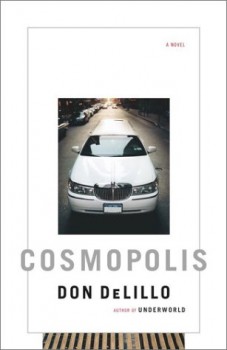 “The logical extension of business is murder”.
In an April day of the year 2000, 28-year-old multibillionaire finance whiz Eric Packer gets up from a sleepless night. He watches the day dawn over Manhattan, then crosses the rooms of his triplex (which he paid, as we will learn, $ 104 mln) and summons his stretch limo. On this day, against all odds, he is making a humongous bet on the yen, in an operation of such dimensions that even his entire wealth may not suffice to cover it. He is also under the impression that he needs a haircut, and embarks therefore, against all odds (and there will be many), on a trip across a particularly busy midtown Manhattan: the point being where he will get his haircut.
In the course of the day and at different stages of his progress cross town he will meet several of his employees, including his experts on technology, currency, finance, and theory; besides other encounters that for now are best kept secret. But why does his behaviour grow increasingly self-destructive? And what exactly is the threat he’s facing?
9/11
This is DeLillo’s first post-9/11 novel. Which is a curious definition, because he had been writing 9/11 novels since the seventies. But beyond mere chronology, Cosmopolis is his first book to deal with the event: with its meaning and most crucially with its causes. It is also curious that his first post-9/11 novel does not take place after 9/11, but some sixteen months before. Reportedly, the novel was already in the works by September 2001. Which proves that, even in the noughties, DeLillo’s understanding of society is so keen that he seems endowed with the power of foretelling.
The setting, as stated in the opening page, is “IN THE YEAR 2000. A Day in April”: exactly when the dot-com bubble burst. Once again, DeLillo offers the reader an insight of where US society is and of where it is heading. As the novel proceeds, one cannot help the feeling that the States willed themselves into the bubble.
And from there it’s only a small step to read the novel as prescient of the current economic crisis, another ill of capitalism that was fully predictable all along.
The whole novel is about “The interaction between technology and capital. The inseparability”, in the words of one of Packer’s collaborators.
Rats
There are various references to animals in the opening sequence, possibly a symbol for Eric Packer’s predatory nature: he watches a gull, “feeling the sturdy earnest beat of its scavenger’s ravenous heart”. His pets are a shark in a pool (!) and borzoi dogs. But most importantly there are the references to rats: I counted no less than a dozen. The first comes in the epigraph: “A rat became the unit of currency”. This is a quote (unreferenced) from the poem Report from the Besieged City by Polish émigré Zbigniew Herbert, written in his Parisian exile while Poland was under martial law. I read the quote as a reference to the end of Communism: the novel’s setting is clearly post-Cold War and pre-9/11; while the line mirrors the focus on turbo-capitalism. In the novel Eric, who reads poetry as a remedy for his insomnia, knows the poem and will recognize the line in a topical moment of the story.
Cosmopolis and the canon
Various themes dear to the author are also present.
The anarchist protest on Times Sq. is pure DeLillo. Moreover, it seems to predict the news of another September: the Occupy Wall St. anti-finance protests which began in September 2011.
Meanwhile, one of the novel’s most interesting characters is Benno Levin, another of DeLillo’s “men in small rooms” (Libra 181) who secretly plot deathward. There are in fact several levels of resonance with Libra. Levin wants to write “ten thousand pages that will stop the world”, which is oddly resonant of the definition DeLillo gave of the Warren Commission Report, “the megaton novel James Joyce would have written if he’d moved to Iowa City and lived to be a hundred”.
Speaking of which. One day, dawn till twilight and into the night; one character on a trek across the city that also represents the world (Cosmopolis indeed). What does it remind you of? Exactly.
DeLillo is a self-admitted lifelong admirer of Father Joyce, as he calls him. Interesting parallels can be drawn between the two writers; not the least of which is the fact that both were educated at Jesuit institutions. Some of DeLillo’s characters bear striking similarities with Joyce’s (Stephen Dedalus and Nick Shay, that’s an interesting subject). Anyhow, do not expect a full-fledged postmodernist version of Ulysses. Inch’allah. In fact, DeLillo is careful to eschew the trappings of such a situation, and downplays any confrontation on equal footing with irony: there will not be a Packersday, since there is no way of knowing exactly in which April day the events of the novel take place.
By the way. I find it curious that inspiration from A Portrait of the Artist produced (along with, well, I guess two dozen different sources of inspiration) the mammoth Underworld, while a rendering of Ulysses was channelled in the short and compact Cosmopolis.
Underworld also springs to mind because of its counter-chronological progression: just as its last part (before the present-day Epilogue) is set in the Bronx of Nick Shay’s adolescence, Eric Packer’s final destination is the Hell’s Kitchen neighbourhood where his father grew up, “in loud close company, in railroad flats, and happy as anywhere”. Both characters are in search of a missing father. As a child Packer used to go to the movies with his widowed mother: doesn’t this remind you of the touching scene in Underworld in which a very small Matt Shay goes to Loew’s Theatre, looking for his father’s ghost?
Also this. Vija Kinski, Packer’s chief of theory, comes out with a commentary reminiscent of Underworld’s closing and of Sister Edgar’s death: “People will not die. Isn’t this the creed of the new culture? People will be absorbed in streams of information”.
Style
DeLillo’s treatment of the subject is, as always (one of the reasons why I love his work), above all stylistic. For the occasion he sheds the jazz phrasings of Underworld and adopts a hard, economical style. Over the years, his prose has been criticised as ice-cold. Readers who agree will have to acknowledge that in this particular case such prose is the best of tools. Although I’ve never read their work, my bet is that old man Don has outplayed McInerney and Easton Ellis at their own game.
In a novel full of dialogues, there’s constant attention to the lexicon of various fields. Finance and technology are obviously related and prominent, but there’s more: Torval’s (Eric’s head of security) coded language is exhilarating. And technical vocabulary overlaps with slang: “Men talked business in tattoo raps, in formally metered chant accompanied by the clang of flatware”.
Music
Which brings us to the prominence of music in the novel, particularly hip hop: which is the sound of NY and a genre most focused on the spoken word. And it’s not just the music itself, for Cosmopolis is made up of the same elements that created hip hop: the streets & car horns, the tar & concrete, the skyscrapers & brownstones, the loud, crowded, impossible contact of Jewish diamond cutters and Somali restaurants.
Paul Auster
Cosmopolis is dedicated to Paul Auster, who in turn dedicated Leviathan (1992) to DeLillo, a book which bore many similarities to DeLillo’s Mao II (1991). Despite the decade elapsed meanwhile, Cosmopolis was perhaps DeLillo’s first chance to reciprocate the favour. Moreover, Cosmopolis is a NY or rather a Manhattan novel, like so many by Auster.
Cosmopolis the film
http://www.cosmopolisthefilm.com/
http://www.cosmopolis-film.com/
DeLillo. Cronenberg. Yes.
The film stars Robert “screaming girls” Pattinson as Eric Packer, and the gorgeous Sarah Gadon as Elise Shifrin. The actress has just played Emma Jung in Cronenberg’s most recent A Dangerous Method, besides sporadic appearances in the TV series Murdoch Mysteries (which I guess no one knows about, except for me). The high profile will hopefully give Don’s work a nice boost. I can’t wait to see how Cronenberg rendered some of the crowd scenes in the novel: the anarchist protest, the rave, the funeral, especially the movie shooting (how will that feel, inside the movie?); but I’m curious about the private moments as well: André Petrescu is just one example. The trip cross midtown would in itself be worth watching. I’m more and more convinced this novel will make a great film. I can’t see the point of those who argue otherwise. Clocking in at a round 200 pages, the novel is compact and action-filled, packed with brilliant dialogues and funny characters.
Don DeLillo
Cosmopolis (2003)
pp. 224, $15
Scribner, 2003
Giudizio: 4/5.
Don DeLillo, The Body Artist
 In extremis: slow, spare and painful.
DeLillo’s first novel since Underworld, preceded in 1999 by Valparaiso, his second stageplay.
As if marking the distance from its predecessor, it is very, almost impossibly terse; to the point that I find it difficult to consider it a novel(la), and not because of its brevity.
Commentators variously describe it as “haiku-like”, “a tightly constructed string quartet”, in an attempt to capture its spareness.
But ultimately The Body Artist has nothing to do with poetry. Although DeLillo makes it do things novels don’t do routinely. Much like Lauren Hartke, the protagonist, does with her body.
Which brings us to another feature of the book: a wealth of meta-narrative moments, with characters, dialogues and paragraphs working like the novel does as a whole. A fractal-like construction (see, I’m using figures of speech, too).
DeLillo’s amazing ability for developing two, even three lines of thought simultaneously over several paragraphs, as though in counterpoint, is here stretched to book length.
Ultimately the novella is not so much about death, loss and mourning (which is what the reader gathers from most abstracts) as it is about time and its influence on the self. Perception, both of the outer world and of the self, is also investigated.
Oh and I almost forgot, this is a ghost story.
Don DeLillo
The Body Artist (2001)
pp. 128, $14
Scribner, 2002
Giudizio: 4/5.
Leonard Orr, Don DeLillo’s White Noise
 My second foray into the Continuum Contemporaries series of Continuum Books (on which more to come): I had already picked up the brilliant and neatly-packed guide to Underworld, written by DeLillo scholar John Duvall.
It is obvious that Underworld and White Noise are wildly different novels in terms of scope, complexity and sheer volume, and while any reading of the former is necessarily partial, Leonard Orr was able to analyze in depth every aspect of DeLillo’s ‘breakthrough’ novel.
Following a brief overview of the writer’s career before-and-after WN, Orr delves into every single theme: Family; Death and Fear; Commmodities, Consumerism, Commercial, Waste; White Noise; American Environments; Hitler and Fascism; Media and Technology; Simulacra.
By the end you’ll have discovered that White Noise is much more complex than you’d have thought…
As I said I’m already familiar with this series of literary guides, always well-made and very resourceful. Despite the small size (a distinctive feature of the imprint) these guides are very neatly tailored and packed with brilliant, no-nonsense academical criticism.
The only inconvenience is that the less-than-100-pages limit often forces the writer to mention other essays in passing; and while this is obviously standard practice in any critical work, here it becomes at times little more than a hyperlink.
On Continuum Books
I discovered this publisher by sheer chance, while looking for academic texts on Underworld (see above). Meanwhile I stumbled, on a complete tangent & again by a fortuitous mishap which I’ll spare you, on the fantastic, habit-inducing 33⅓ series of musical guides. I mean, folks, take a look at their catalogue: http://333sound.com
And then be ready to find out that that was just a small portion of Continuum Books HUGE output: http://www.continuumbooks.com/
I discovered their New Series on Contemporary North American Fiction: three major works by a single author, from 1990 onward, analyzed at once. Again, a curious format coupled with razor-sharp academic research and top-tier source material.
They’ve recently published one on “DeLillo. Mao II, Underworld, Falling Man”.
Continuum was nominated Independent Publisher of the Year 2011 by the Independent Publishers Guild. There you go.
Matthew Stearns, Sonic Youth’s Daydream Nation
 Complete and well-researched analysis of the most important album by arguably the most important and innovative band of their time.
The author, musical critic Matthew Stearns, works backwards from the recent official acknowledgment as a true historical document: in 2006 the US Library of Congress added Daydream Nation to the permanent archives of the National Recording Registry. Not merely the Rock and Roll Hall of Fame… Nice deed for an indie rock album.
Following a foreword by Lee Ranaldo, a preface and an intro, the book is organized into sections, according to the four sides of the original vynil record; this sequence interlocking in turn with five chapters exploring related subjects: the band’s cumulative influences, the indie scene, the social, cultural and political zeitgeist, NY and modern art as primary influences, the recording process during the awful summer of ’88, the album’s art and packaging…
Sonic Youth surfaced in the early eighties as heirs to the New York traditions of both rock-meets-avantgarde of the Velvet Underground and poetry-meets-postpsychedelic guitarwork of Television.
Unlike many of their contemporaries, their roots were not in the indie/postpunk/no wave burgeoning scene as much as in experimental music and even nonmusical contexts, such as modern art. Obviously New York was also a major influence on their claustrophobic, schizoid, beautifully dissonant sound, developed in the string of albums that marked the decade, culminating in Daydream Nation. As Ranaldo acknowledges, they “started from scratch again” at the turn of the decade with Goo, first record of their major-label period. And yet another chapter began in the new century with NYC Ghosts & Flowers, with Jim O’Rourke joining the ranks and the founding of SYR (Sonic Youth Records).
Back to ’88.
Reaganism giving way to Bush #1, AIDS and crack murdering people at unprecedented rates, the mainstream music scene totally crap. SY enter Green St. studios with Nic Sansano, whose “previous engineering duties included production work on Public Enemy’s […] It Takes a Nation of Millions to Hold Us Back”, another urgent State of the Union Address: hence the titles.
Stearns has interviewed all of the band members, as well as recording engineer Nicholas Sansano. Precious material both to the SY fan and to the curious reader. The only disappointing aspect is Stearns’ tendency to get too carried away with redundant embellishments, especially when interpreting the album’s lyrics.
But this is just as good: as a consequence of this slight disappointment I won’t be overanxious to order my next 33⅓ guide. Speaking of which…
On Continuum 33⅓ series
Just take a look at their catalogue. These books sell for €6, less if you’re lucky [edit: no longer since amazon bought bookdepository]. Irresistible. The perfect drug. Here’s some from my wishlist, and mind you that’s just the top of the list: Electric Ladyland, Forever Changes, Trout Mask Replica, The Velvet Underground and Nico, Horses, Another Green World, Low, Loveless…
Matthew Stearns
Sonic Youth’s Daydream Nation
pp. 172, £9
Bloomsbury/Continuum, 2007
Giudizio: 3/5.
Bill Janovitz, Rolling Stones’ Exile On Main St.
 “The single greatest rock’n’roll record of all time, okay?”
If you agree with the opening sentence of the book, you don’t need to read this comment. You need to go out (or simply open another Firefox window) and buy the bloody thing. If you don’t, stick around and learn one or two things about music. If your favourite band is Led Zeppelin, you may be reading the wrong blog.
Bill Janovitz has the necessary amount of passion to do justice to the album, and he knows virtually all the anecdotes about the making of. He’s the right man to write about the myth: not so much as a musician in his own right, but because he has been a fan of the album since childhood. He grew up into the author of this book.
Although I’m surprised he doesn’t even mention Pussy Galore, who published a song-by-song cover version of the ENTIRE Exile in 1986.
After the pop forays of Between the Buttons and the psychedelic experiments of Their Satanic Majesties Request, both half-hearted attempts despite Brian Jones’ undiscussed genius, the Stones decided they were happy with just being the greatest rock’n’roll band on earth. And emerged from the sixties with a scintillating home run of albums whose sustained quality has rarely been matched by any artist in the history of recorded music. A sequence culminating, arguably, with Exile. What came after that, from Goats Head Soup onwards, was really only post-coitus.
The book is organized in two parts: first section is a general intro and second section is a song-by-song analysis.
I’m fully aware that writing a comment about a book about a record is quite ridiculous and at least twice removed from the real thing. Besides, as Frank Zappa said once, or was it Elvis Costello, “Writing about music is like dancing about architecture”.
But this is history we’re talking about.
p.s. all Zep fans can read this one. On a tangent, I’ve discovered an interesting article titled “Separated at Birth? Exile on Main St. & Physical Graffiti”.
Bill Janovitz
Rolling Stones’ Exile On Main St.
pp. 174, £9
Bloomsbury/Continuum, 2005
Giudizio: 3/5.
Martin Scorsese, Shine a Light
Mi trovo in difficoltà a dare un voto. Cosa dovrei giudicare, esattamente?
Gli Stones? Sono the greatest rock’n’roll band on earth.
Scorsese? Non credo ci sia qualcuno che non lo considera un maestro, a prescindere dal proprio grado di sopportazione nei confronti di Hollywood.
A dirla tutta, poi, ho guardato il video tra le cinque e le sette di mattina (insonnia…), quindi le mie capacità critiche erano forse un po’ annebbiate.
Si può opinare il fatto che siano ancora in giro nonostante defezioni & morti, ora che i sopravvissuti hanno il triplo degli anni di quando iniziarono, ed alla luce del fatto che quasi metà della loro carriera in fin dei conti è prescindibile. Allo stesso modo, si possono criticare i palchi mastodontici che portano in giro per il mondo per consecutive 24 pagine del calendario (ma bisogna riconoscere che sanno farlo con stile, a differenza per esempio di una certa band irlandese il cui nome è un codice alfanumerico).
Ma la verità è che rivederli, anche solo in video e non dal vivo, mi emoziona ancora.
Inoltre il loro ultimo album, A Bigger Bang, è considerato il migliore dai tempi di Some Girls (1978). A riprova del fatto che in questi casi non è l’età a rincoglionirti.
Le immagini del film risalgono proprio al Bigger Bang Tour: la band aggiunse due date a fine ottobre 2006 nel fantastico Beacon Theatre di New York appositamente per le riprese.
Le immagini di Scorsese &co. rendono giustizia alla bellissima scenografia (brass’n’wood, un certo sentore steampunk?), studiata per esaltare la band e mettere in secondo piano gli altri sidemen (sezione fiati, coristi…) ed i tecnici. Comme d’habitude chez les Rolling Stones. Scorsese del resto alimenta questa dimensione “eroica”, soffermandosi ossessivamente su Jagger, Richards e Wood e inquadrando Watts raramente e quasi per sbaglio. Per non parlare di Darryl Jones: suona regolarmente con gli Stones da quasi vent’anni ormai (dopo i vari Miles Davis, Eric Clapton…) ed è praticamente invisibile alle telecamere.
Nel commentare questo ‘rockumentary’ potrei fare la lista dei pezzi più riusciti e dei momenti topici, ma vi lascio il piacere della scoperta. E poi erano le cinque di mattina di una notte in bianco.
Ah, già: l’incipit è divertentissimo. Non che il resto sia noioso, ma vedere Scorsese alle prese con i Rolling Stones (oltre agli Stones alle prese con se stessi) è davvero spassoso.
Non dimenticatevi gli extra.
http://www.shinealightmovie.com/
Martin Scorsese
Shine a Light (2008)
libro + dvd
pp. 125, 122′, €18,9
Feltrinelli, 2008
Giudizio: 4/5.
James Marsh, Man on Wire
 Vincitore nel 2009 del premio Oscar come miglior documentario.
Tutto era iniziato nella sala d’attesa di un dentista parigino. Nel 1968 un diciassettenne Philippe Petit nota un’immagine del progetto per il World Trade Center in una rivista e ne rimane stregato. Strappa la pagina, si tiene il mal di denti ed inizia a sognare. Sogna un’impresa impossibile sulla cima delle Twin Towers, che diventeranno la costruzione più alta del mondo ma a quel punto sono ancora un progetto su carta. Ma Petit è un sognatore come pochi. Ostinato, caparbio, ambizioso. E folle.
Aveva da poco iniziato a praticare il funambolismo. Ancora bambino era diventato mago e giocoliere autodidatta. Applicandosi in seguito a pittura, scultura, scherma, stampa, falegnameria, teatro, equitazione. Tauromachia. Espulso da cinque scuole prima della maggiore età. Avrebbe potuto diventare un circense modello, ma perfino il circo gli andava stretto. Diventò quindi artista di strada, ovviamente sui generis. Silenzioso, misterico. La giocoleria come introspezione e indagine del sé.
Le Torri, Petit ed il suo sogno crescono insieme. C’è una sequenza bellissima all’inizio del film, che si apre con una ripresa del cantiere delle Twin Towers, affiancata pochi secondi dopo da alcune foto dell’infanzia di Petit, che si atteggia a marinaio, esploratore, spadaccino, e finalmente a scalatore e prestigiatore.
E lui stesso dirà di quegli anni, retrospettivamente: “Usually when you have a dream, the object of your dream is tangible, is there, it’s quixotic but it’s there, nagging you, you know, confronting you. But the object of my dream doesn’t exist yet.” Petit trova degli aiutanti (dei complici) ed appronta preparazione, esercizi, sopralluoghi.
Il film è basato sul suo libro To Reach the Clouds (2002) e, stando a wiki, è costruito come un heist / caper movie. La tensione narrativa è data dalla costruzione ad incastro: gli eventi del 7 agosto 1974, ricostruiti nel dettaglio ed assolutamente avvincenti, sono inframmezzati agli episodi salienti che negli anni hanno portato a quel giorno. Lo spessore narrativo invece è fornito dalla polifonia di voci: tutte le persone coinvolte sono state intervistate per il film; e comparare convinzione, coinvolgimento e contributi di ciascuno di loro ci restituisce la dimensione della pazzia di Petit.
Ipse dixit: “And slowly I thought: Ok, now… it’s impossible, that’s sure. So let’s start working.” Non è adorabile?
La sinossi del film è reperibile in inglese sul sito ufficiale e in italiano qui per gentile lavoro amanuense del sottoscritto.
Dice James Marsh, il regista: “Decisi di fare un film che fosse il resoconto veritiero di questa mitica quête. Dramma esistenziale, commedia degli errori, storia d’amore e racconto sull’amicizia e i suoi limiti, oltre che una satira sull’autorità e le sue regole arbitrarie: il film sarebbe diventato tutto questo e altro ancora”. Petit ha accettato la proposta, fornendo a Marsh un repertorio sterminato ed insostituibile di immagini e filmati originali. Fa un certo effetto vedere i protagonisti, oggi di mezza età, e rivederli poi ringiovaniti di trent’anni nei super8 in b/n dell’epoca.
In una di queste sequenze viene inquadrato uno schermo TV, che mostra Nixon dichiarare la propria innocenza nel corso del Watergate. È una sequenza breve ma significativa. Per contro, nessun accenno viene fatto a quello che sarebbe accaduto 27 anni dopo: a suo modo questo è -anche- il racconto newyorkese di come le Twin Towers sono nate, e non di come sono state distrutte.
“Molti newyorkesi conoscono Philippe,” afferma Marsh. “È parte essenziale del folklore della città, tanto più adesso che le Torri non ci sono più. Ma seppi subito che il destino delle Torri non aveva niente a che fare con il nostro film. L’avventura di Philippe doveva stagliarsi solitaria, come una favola, tanto più meravigliosa perché veramente avvenuta, ambientata in un periodo storico solitamente ricordato come corrotto e squallido.”
Romanzieri & compositori. New York & Paris.
Ho fatto la posta a questo film per mesi. Richiesi l’acquisto alla mia biblioteca, e prima di poterlo prendere a prestito attesi i tempi tecnici (anche Blockbuster vuole, o meglio voleva, la sua parte). A catturare la mia attenzione, credo, fu il nome di Paul Auster sulla copertina, citato tra i collaboratori del libro allegato. Ho scoperto poi che il testo di Auster era già apparso in The Art of Hunger, ed è quindi probabile che l’avessi già letto. Questo spiegherebbe tra l’altro perché il nome e le imprese di Petit non mi erano nuovi. Ho anche scoperto che Auster fece la conoscenza di Petit, in modo assolutamente casuale, durante il suo soggiorno francese nei primi anni ’70, quando Petit faceva il giocoliere per le strade di Parigi. Secondo i miei calcoli (ne ho parlato anche nella mia tesi) quello fu anche il periodo in cui Auster entrò in contatto con Sophie Calle. Ma quella è un’altra storia.
Per una curiosa coincidenza, che forse non è affatto una coincidenza, nell’estate newyorkese del 1974 si svolge anche la quarta parte di Underworld di DeLillo. Anche in quel caso c’è il Watergate sullo sfondo, oltre naturalmente alla sagoma delle Twin Towers in costruzione. Ed anche in quel caso il punto di vista sulla città è spesso sopraelevato: la protagonista si ritrova invitata ad una serie di party sul tetto di questo o quel palazzo di Manhattan, nel corso di quella che lei definisce la sua rooftop summer; forse per evitare gli effetti collaterali del concomitante e nefasto sciopero degli spazzini, di cui invece risentono i piani bassi (e questo non è certo uno spoiler del romanzo, semmai un teaser!).
L’impresa di Petit costituisce inoltre il prologo di Let the Great World Spin di Colum McCann, “Those Who Saw Him Hushed”.
La colonna sonora del film è di Michael Nyman, ma include anche altre composizioni, tra cui, crucialmente, la Gymnopédie n. 1 e la Gnossienne n. 1 di Satie.
James Marsh
Man on Wire (2009)
libro + dvd
pp. 72, €14,9
Feltrinelli, 2009
Giudizio: 4/5.
Stefano Benni, Misterioso
 “Scrivere di musica è come danzare di architettura”, diceva Frank Zappa (o Elvis Costello secondo altre scuole di pensiero). E questo è ancora più vero nel caso di Thelonious Monk, il misterioso, enigmatico, geniale pianista che ha attraversato il jazz come un corpo estraneo. Monk che impiegò anni ad elaborare uno stile che poi mantenne per la vita; non si evolse con le mode, fu invece la storia della musica a dover fare i conti con lui. Monk con i suoi copricapo. Monk che a metà concerto si alzava dal piano e durante l’assolo di sax si metteva a volteggiare sul palco.
Stefano Benni e Umberto Petrin, lo scrittore e il musicista, gli rendono omaggio a modo loro, portandolo a teatro. Uno spettacolo nato, come confessa Benni nell’intervista (tra i contenuti speciali del dvd), dalla comune passione; proposto in anteprima al Vicenza Jazz e talmente coinvolgente -a livello emotivo innanzitutto- da venire riproposto dieci, venti volte. Uno spettacolo in continua evoluzione, in cui testi e musiche vengono rimpiazzati via via in un dialogo a due, fino a raggiungere la forma ‘canonica’ registrata in questo dvd.
Benni recita poesie proprie ed altrui, tra cui America di Ginsberg ed alcuni estratti della biografia romanzata di Monk firmata da Laurent de Wilde.
Petrin a sua volta scivola continuamente tra composizioni originali e pezzi di Monk; ma inanella anche I’m Still Here di Waits e della moglie Brennan, nonché la Freedom Suite di Rollins nell’encore. Per inciso, lo spettacolo dura poco più di un’ora, di cui l’ultimo quarto è in effetti un bis in cui Benni propone altri testi ed uno degli ‘outtakes’ originali.
Uno spettacolo, come recita il sottotitolo, costruito sui silenzi di Monk. Unici, peculiari, sorprendenti. Come dice Petrin, “la sua musica contiene parecchi silenzi: il rapporto con il vuoto. Non con il nulla, ma con la profonda intimità”. E nelle parole di Benni:
“Mi chiamo Monk, Thelonious Monk:
E ho qualcosa in testa che vi devo proprio raccontare
Ogni silenzio è diverso da un altro […]
Tra una parola e l’altra c’è sempre un breve silenzio
In cui puoi sentire il respiro e il pensiero
E nel concerto, una sola nota e poi silenzio
E il silenzio dopo una nota diventa silenzio
prima di qualcosa, silenzio che attende
Blues, urlo, sparo o voce amica”.
Un’opera che è anche una riflessione sugli States, “il mio paese bianco e nero capace di jazz e sedie elettriche”.
Il libretto allegato contiene, oltre ai testi recitati da Benni, un articolo di Franco Fayenz ed un “assaggio di discografia”, un po’ frustrante perché molto accurata ma limitata ai compact discs.
Titoli di coda
Ad uso personale, le composizioni di Monk che Petrin suona: Friday the 13th. I Mean You. Work. Ask Me Now. Misterioso. Epistrophy. ‘Round About Midnight.
Stefano Benni
Misterioso
libro + dvd, musiche di Umberto Petrin
pp. 48, 61′, €14
Feltrinelli, 2004
Giudizio: 4/5.
Jonathan Demme, The Agronomist
Document(ari)o importante, una testimonianza dell’assoluta dedizione delle persone coinvolte: non solo di Jean Dominique & del resto della crew di Radio Haiti Inter, ma anche del regista Jonathan Demme. Oltre che della moglie e ora vedova di Dominique, Michèle Montas, una donna straordinaria (e, sia detto tra parentesi, anche molto bella).
La passione di queste persone provoca ammirazione e anche un po’ di commozione. Messi a confronto con i cosiddetti giornalisti nostrani, beh…
I filmati hanno il pregio di restituirci la mimica eccessiva, travolgente e assolutamente irresistibile di un uomo che, ironicamente, di lavoro faceva il giornalista radiofonico.
D’altro canto le immagini degli haitiani (spesso tratte da film o documentari realizzati con la partecipazione dello stesso Dominique) hanno una potenza & un’espressività rare.
Merita di essere guardato & discusso più spesso; specialmente dopo il terremoto del gennaio 2010.
Azzeccata la colonna sonora a cura di Wyclef Jean.
Ben fatto & molto utile anche il volume allegato.
Jonathan Demme
The Agronomist (2003)
libro + dvd
pp. 158, 88′, €18
Feltrinelli, 2005
Giudizio: 4/5.

The central chapters portray Richard Elster, an elderly scholar, who has spent two years at the Pentagon with the task of giving an intellectual framework to the war in Iraq: “He was there to conceptualize, his words, in quotes, to apply overarching ideas and principles to such matters as troop deployment and counterinsurgency”. Now, at 73, in the late summer/early fall of 2006, he retires to his house in the desert “somewhere south of nowhere”, 25 miles from the nearest town, in order “to stop talking” and just let the time pass. He is accompanied by Jim Finley, a filmmaker “less than half his age”, who is trying to persuade a reluctant Elster to star in his next project: a single shot of his head, standing against a wall and talking about his experience with the Pentagon. “Just a man and a wall. Any pauses, they’re your pauses, I keep shooting. One continuous take”.
Days pass, then weeks. The two men talk, or more often they don’t. Elster is sympathetic as a dried bone and nearly as talkative, and the fact that the story is told in the first person by Finley doesn’t help in getting the man across. The two discuss Elster’s work at the Pentagon (about which more to come) and Finley’s film project: he mentions Russian Ark by Sokurov, “a single extended shot, about a thousand actors and extras, three orchestras”; to which Elster replies drily, “but that was a man named Aleksandr Sokurov. Your name is Jim Finley”.
At some point they are joined by Elster’s daughter Jessica, a young woman in her mid-twenties who lives with her Russian mother (i.e. Elster’s ex-wife #2) and doesn’t seem very responsive to her father’s love. Nor to Finley’s discrete but growing attraction towards her, which however never develops beyond voyeurism and sterile daydreaming. Sterility and aridity are in fact recurrent if unspoken tropes in the novel. The men are both separated from their wives. Jessie is sent to her father by her mother, so that she’ll stay away from the guy she’s seeing. Jim and Jessie talk, but do not even start to get along. And the aridity goes much deeper. In his “sandlike” voice, Richard mentions the French Jesuit Teilhard de Chardin, only to reverse his theories. De Chardin believed that the universe tends towards ever increasing complexity and conscience, an evolution culminating in the Omega Point: the entire universe as a self-conscious entity (a concept de Chardin identified in turn with Christ). Elster turns the theory on its head and interprets the Omega Point as a negative longing: “Now comes the introversion. Father Teilhard knew this, the omega point. A leap out of our biology. Ask yourself this question. Do we have to be human forever? Consciousness is exhausted. Back now to inorganic matter. This is what we want. We want to be stones in a field”.
No wonder Elster is drawn to the desert. The desert, in DeLillo’s work (cf. Love-Lies-Bleeding, the Pocket in Part 4 of Underworld), is the epitome of what is irreducible to human scale, of everything that resists modification and adaptation, understanding and conceptualization. Unlike the cities that Elster flees, where everything is man-made and designed around the human being, the desert is terminally inhuman and alien. Not only in biological but in intellectual terms as well: it cannot be interpreted, read, rationalized. It can hardly be inhabited. It imposes its own scales of space and time. “Time falling away. That’s what I feel here,” Elster says. “Time becoming slowly older. Enormously old. Not day by day. This is deep time, epochal time. Our lives receding into the long past. That’s what’s out there. The Pleistocene desert, the rule of extinction”.
Time is slower in the desert, incomparably slower. The same slowing down re-presented by 24 Hour Psycho, Gordon’s installation that stretches the Hitchcock classic to last a full day: 2 frames per second rather than the usual 24. Watching it for extended periods of time is an alienating experience, akin to that of the desert: after the initial rejection, mind and body begin to adjust to a different time dimension, not to be measured in minutes and hours, not even in days and weeks. In the desert, Finley soon stops counting the days. Bu then, something tragic happens…
Slow, spare and painful
DeLillo’s fifteenth novel has also been an alienating experience to certain readers. Slow to the brink of stillness, dry to the limit of sterility. The point being, the novel as a self-revealing metaphor. As he enters the fifth decade of his career, DeLillo’s mastery over the medium is astonishing. The density of his prose is breathtaking, the command over his topics imposing.
Point Omega is also DeLillo’s novel about the G.W. Bush administrations and the war in Iraq. Elster’s remarks about his own involvement are almost as hard to take as his utter lack of self-remorse:
“This is something we do with every eyeblink. Human perception is a saga of created reality. But we were devising entities beyond the agreed-upon limits of recognition or interpretation. Lying is necessary. The state has to lie. There is no lie in war or in preparation for war that can’t be defended. We went beyond this. We tried to create new realities overnight, careful sets of words that resemble advertising slogans in memorabilty and repeatability. These were words that would yield pictures eventually and then become three-dimensional. The reality stands, it walks, it squats. Except when it doesn’t”.
In fact, his words seem to echo those of Delillo’s essay In the Ruins of the Future, which is kind of unsettling: “I still want a war. A great power has to act. We were struck hard. We need to retake the future. The force of will, the sheer visceral need. We can’t let others shape our world, our minds. All they have are old dead despotic traditions. We have a living history and I thought I would be in the middle of it”. Eventually Elster becomes disappointed not for having joined but for being irrelevant. After willingly accepting the position he was offered, he grows disillusioned about his ability to provide a different, personal, conceptualization of the war. The power of language, his ideas about a ‘haiku war’, are entirely swallowed by the artificial jargon of the military apparatus, what he calls “News and Traffic, Sports and Weather”. Leading him away from the conflict in the Fertile Crescent and to the stillness of the American desert. In both cases, death. This is one of the (not omega) points the author makes: Elsters’ personal loss, which I will not reveal, and his inability to even start dealing with it, mirrors the loss of young lives in the war.
Point Omega is yet another master stroke on DeLillo’s part, and his third novel in a row to analyze the successive stages of U.S. life in the new millennium.
Soundtrack: Desert Music by Steve Reich.
Don DeLillo
Point Omega
pp. 128, $16
Scribner, 2011
Giudizio: 3/5.